Data doesn't speak for itself
Training in how to translate data

I try to keep Fridays reserved for paid YLE subscribers, and particularly the professionals and trusted messengers who are guiding households, communities, and patients. My goal is to help make your life a little easier. This week, Liz, Executive Director of The Evidence Collective—a program extension of Your Local Epidemiologist—led a scicomm training, so I’m passing the mic to her.
I’ve sat in many classrooms as a student over the years. In none of them was I taught how to communicate in ways that best reach and meet the needs of the audience I was addressing. Particularly if that audience wasn’t scientists.
I learned through failures and experience, and by seeking out guidance where I could find it. But it shouldn’t be this hard.
It’s time to change this for our entire field. It’s time to go beyond the communications team at our institutions. Every scientist and community organization should know how to “translate” science to their community. And sure, some of us will remain in the lab, but some brilliance needs to be unleashed so more science can reach people, and more people can reach science.
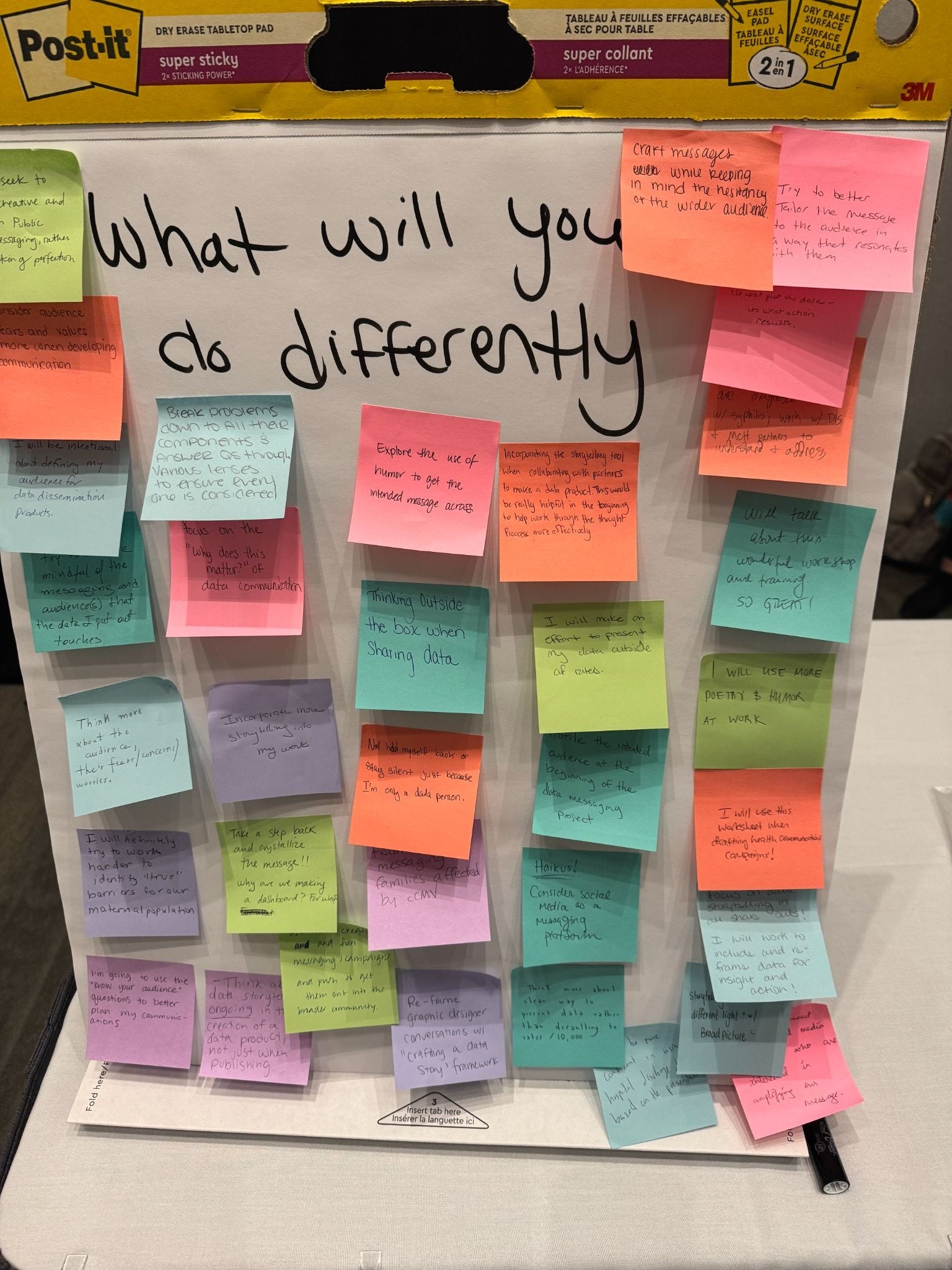
The Evidence Collective recently provided data communication training, and not only was it insanely fun, but also, for the first time, I sensed a deep hunger. It gave me hope: scientists are no longer just trying to figure out where we lost trust; now they want to do something.
Here’s a peek at some of the things we covered, and things you should consider when working to better engage your communities.